Showing posts with label media. Show all posts

May 24, 2020

How to: Add comments to Google Photos

Google photos is one of the best organizing, sharing and collaborating apps for your photo library.

Seeing old photographs can trigger recall of lost memories, details around the events captured in he photograph. Best thing to do is to note these associated memories down immediately before they get lost again in the hurried mindscape of everyday living. The easy method of doing this noted below:

While on computer

1. Go to the particular photo on the Google Photos site. You'll probably already be looking at it.
2. Move the mouse down to the 'comments' icon as show in above pictures, and click on it
3. Write your comment down in the text box and click the send or Arrow button.

On a Mobile or Tablet

1. Go to the particular photo on the Google Photos App.
2. You'll probably already be looking at it
3. Find the 'comment' icon, and click on it (see pictures above)

4. Write your comment and click 'Send' button, same as you would for a 'text' or 'SMS' message


* * *


Mar 10, 2010

News Channel Secrets

I don't watch as much news on TV anymore. Is it that the internet has taken over, or perhaps I've become subconsciously aware of the same boring pattern. See video below:


Jan 7, 2010

Sherlock Holmes for the 21st century


I went to the cinema to expecting to see a different Sherlock Holmes, a character repackaged to cater to a new market, in a crude manner that detracts from his original essence. Didn't happen.

The new Sherlock Holmes, played by Robert Downey Jr., is a much more dynamic character - younger, more adventurous, bit less of the English gentleman than previously depicted. Nevertheless, the core of the character hasn't been lost - the eccentricity, self-assuredness, intense concentration, and even human weaknesses. Jude Law would not have been my choice for Dr. Watson, but he's pulled it off quite well, next to Downey's Holmes. So, if you are a fan of the classic A.C.Doyle's Sherlock Holmes, you probably won't be disappointed.
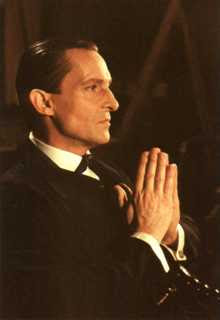
Jeremy BrettThe marked difference was in the the look of Holmes. The new movie has not shied away from redefining the portrait - gone is the combed back hairstyle, the sharp jawline and chin. Downey doesn't look anything like the classic Holmes, who has been played best by actor Jeremy Brett (see on the right) in the almost complete series by Granada Television. Jeremy Brett was probably the first to capture the full theatrical intensity of the character, watching him was like following the original sketch in the books. In fact, my friend Prasanna aptly remarked that the villain in the movie is a closer look to the classic Holmes. Not commonly known is the story that the look of Holmes didn't come from the author A.C. Doyle but from his first illustrator.

The story of Sherlock Holmes first began in 1887, with the story A Study in Scarlet, published in Strand magazine, London. The Sign of Four was published in 1890, and the series The Adventure of Sherlock Holmes began in 1891 ...

With the stories serialized in The Strand came the first illustrations, and it was Sydney Paget who was to fix the the features of the tall, thin, bony character for generations of enthralled readers. The story is that Sydney was actually commissioned by mistake, instead of his brother Walter, whose work the magazine knew through his illustrations for Rider Haggard and Robert Louis Stevenson. If so, this quirk of fate was balanced by a kind of poetic justice on Sydney's part, for he used his brother's lean features as his model for Holmes. And later after Sydney's death in January 1908, Walter himself illustrated one of the stories, The Adventure of the Dying Detective. What Holmes would have looked like had Walter got there first we can only guess, for, like all the other artists commissioned to continue Sydney Paget's work, Walter did not stray far from the image of himself Sydney had fleshed upon the bones of Conan Doyle's creation.
- Preface, The Complete Illustrated Sherlock Holmes


Holmes has been seen that way ever since. There have been many actors in to play the detective, all bearing resemblance to Sydney Paget's illustration.

However, more than that, the reason Sherlock Holmes has avid followers around the world and across generations is his personality. In a sense he is very much a 20th century man, before his times, even bit of a rebel. His firm foundation in scientific principles led him to be accessible, yet his public performance of a mind-reader and magician is highly entertaining. He's a magician who, in the end, reveals his tricks of the trade, leading all who read the accounts to think that they can follow the indicated lead. He's a fictional character that has inspired creation of countless other similar fictional characters. It becomes more than just a story.

The new movie with all the benefits of modern technology (and big budget) fills in the larger picture as well. The musical score suits the setting. There are panoramic views of the London of the late 19th century, with references to the social, technological and industrial upheavels taking place ..

Arthur Conan Doyle's birth year, 1859, fell 22 years into Queen Victoria's 64-year reign, a time of unparalleled growth and optimism for the British Empire. Resources and labor taken from colonies worldwide had made England prosper, and the time of serious independence struggles lay in the distant future. Business flourished, technology blossomed, and London grew at a great rate - from one million people to six in the space of a century - creating problems of urban overcrowding familiar to us today: poverty, homelessness, drug abuse, crime. While the great divide between rich and poor and the economic and human strain of maintaining the colonies exacerbated social problems that were as yet insoluble, Victorian Britons, led by Victoria's husband Albert, put their faith in technology and science. The contrasts and conundrums of this fascinating time provided Conan Doyle with the raw material and the backdrop for Sherlock Holmes: a man of science, undistracted by the gentler passions, who moved easily through the disquieting urban space, using his wits to solve its moral and practical dilemmas.
- Sherlock Holmes, Victorian Gentleman http://sherlockholmes.stanford.edu/history.html


Come to think of it, there are actually many parallels to the enormous changes taking place in cities of the today's emerging nations. Many of similar patterns and contrasts can be spotted in places such as New Delhi. It could be a new setting for a modern fictional detective.

Mar 16, 2009

All right, Telstra and Google

Section 92a is probably dead in the water now, after Telstra clear pulled out of any negotiations with the Telecommunications Carriers Forum.

"You have got to have sympathy for the Government. They have inherited an ambiguous mess and you can understand why they might have hoped a code would make this go away. But we have had unprecedented customer concern and we can't try to make a bad law work."The idea our customers can be disconnected on accusation and not proof does not pass the 'fair test'."

Next, Google has also considered this important enough to make a submission

In its submission, Google notes that more than half (57%) of the takedown notices it has received under the US Digital Millennium Copyright Act 1998, were sent by business targeting competitors and over one third (37%) of notices were not valid copyright claims.

As such, Google says "Section 92A puts users’ procedural and fundamental rights at risk, by threatening to terminate users’ internet access based on mere allegations and reverse the burden of proof onto a user to establish there was no infringement."

It goes on to say, "Section 92A undermines the incredible social and economic benefits of the open and universally accessible internet, by providing for a remedy of account termination or disconnection that is disproportionate to the harm of copyright infringement online."


Mar 8, 2009

92a suspended

Seems that all the outcry by the internet user and developer community reached the government and the section 92a amendment has been suspended.

Prime Minister John Key said the law change would be delayed till March 27 to give more time for the recording and internet industries to reach an agreement setting out how ISPs would apply the clause. If no agreement was reached, section 92a might be "suspended" and the act re-written.

More at http://www.stuff.co.nz/national/1755057

Let's see where this goes, there needs to be a disengagement between rights management and internet access as opposing sides.


Feb 19, 2009

Section 92a - Guilty by Accusation

As part of the DRM (Digital Rights Management) and Copyright regime's push worldwide for compliance, a law is being proposed to be passed in New Zealand. Section 92a, that amends the country's copyright law is expected to come into force on February 28.

What has drawn near-universal criticism, is the provision that Internet Service Providers (ISPs) are to terminate the connection of anyone labelled a 'repeat infringer' of copyright violations. So just 'repeated accusations' are required, without further proof. Certainly a deviation of normal justice. The lack of response of the government to the criticism is drawing increasing ire.

At the Webstock conference, one of the game trading cards is used to highlight this.

Webstock Trading Cards - Stupid Law


At creativenewzealand.org a protest NZ Internet blackout has been called. Hence you see my profile photo blacked out on most of social websites.

New Zealand's new Copyright Law presumes 'Guilt Upon Accusation' and will Cut Off Internet Connections without a trial. Join the black out protest against it!


Another potential side-effect is it adds another reason to the creative IT community in NZ to leave for other shores.

The legislation
News article on parliament protest.
Blog post on Geekzone


Jun 9, 2008

Honking Ears by KAL

When a famous talented cartoonist meets digital animation, delightful new expressions may result. Kevin Kallaugher (aka KAL), who's been creating political caricatures for the Economist since 1978, has now set his sights on giving virtual life to his drawings.

As George Bush's term nears its end, it's probably the cartoonists who will be the most saddened. Meanwhile KAL carries on in a new media ...


And here's another on the democratic nomination race, which has just concluded ..

Apr 16, 2008

200,000 books, one Geek with his computers

A very interesting New York Times article covers what is effectively a stupendous mockery of the process of creating a book. But books are produced nevertheless, and some people buy them.

The infinite monkey theorem states that a monkey hitting keys at random on a typewriter keyboard for an infinite amount of time will almost surely type a particular chosen text, such as the complete works of William Shakespeare.  - Infinite monkey theorem, Wikipedia
Humans cannot deal with infinity, but we can use better assistants than monkeys to reduce the time it takes. In the Information age, Philip M. Parker, has put his name to 200,000 books setting records for being a prolific author. The catch to this inhuman behaviour is an array of assistant computers programmed to fetch information online on any particular topic and compile them into a book. He explains the process in the following video.


It's unnerving to think that this process can be extended to other media like games, audio and video as well. Effectively it establishes the precedent that a person is not required to compile content into human consumption media items like books or movies.

At the library end, I wonder what this implies for cataloguers. It doesn't make sense for humans to be organizing output that comes from machines. Do cataloguers they have to be human too, or can they just be machines instantly summarizing and deriving overviews from the content?

I found some of these books here on Amazon.

The New York Times article can be found here.


Mar 6, 2008

Books: Richard Herley

Here's another author who is now offering his books (or ebooks) direct to users. A relatively well-known author who's book The Stone Arrow won the Winifred Holtby Memorial Prize. His book The Penal Colony was made into a movie No Escape starring Ray Liotta.

He likens his delivery mode to software shareware - "A model based on trust" :

You are free to download and read each of the books posted on this site. If you enjoy or gain value from it, I ask you to pay me a one-off fee. Just as with computer shareware, the same condition is imposed on recipients of any copies you make.

The fee is related to the length of work as well as to my collection costs, and is comparable to a single royalty from a mid-priced edition. It is much less than the price of a paperback or a commercial ebook of similar quality and length.

In this way you will encourage me to go on producing work you like. I hope that you will also feel a personal interest in the book concerned and a connection with its author.

The books are available on his website http://www.richardherley.com/ .


Mar 2, 2008

Book: Future of Reputations


An interesting book The Future of Reputation, by Daniel J. Solove is now available for free online. It describes itself in the introduction:

This is a book about how the free flow of information on the Internet can make us less free. We live in an age drenched in data, and the implications are both wonderful and terrifying. The Internet places a seemingly endless library in our homes; it allows us to communicate with others instantly; and it enables us to spread information with an efficiency and power that humankind has never before witnessed. The free flow of information on the Internet provides wondrous new opportunities for people to express themselves and communicate.

But there’s a dark side. As social reputation–shaping practices such as gossip and shaming migrate to the Internet, they are being transformed in significant ways. Information that was once scattered, forgettable, and localized is becoming permanent and searchable. Ironically, the free flow of information threatens to undermine our freedom in the future.

These transformations pose threats to people’s control over their reputations and their ability to be who they want to be.
More on this topic
It is often thought that a team of editors or moderators could go through each item of information submitted to verify the veracity. But then the volume of information submitted in an open online environment has the potential to easily overwhelm the resources (particulary human resources) we deploy. Even more difficult are the cases where conclusions submitted online can be a single side in an unresolved debate.

The solutions to these problems probably lie in the very openness of the environment that is setup. First of all a disclaimer can be published that the information given is not necessarily verified. After that, self-assessing mechanisms can be enabled that contributors use to assess and qualify the authority of information objects found online, such as ratings.

There has been the emergence of certain organisations that offer reputation-monitoring services. They keep an eye on every online manifestation relevant to your interest and keep you informed if anything untoward takes place. One such is distilled.

Sep 4, 2007

Printing Wikipedia

Everybody who has studied in school and university would have seen, touched and interacted with the print edition of the Encyclopedia Britannica. It consists of over 30 hard bound volumes of printed text, illustrations and images, probably as shown below.

Encyclopaedia_Britannica_15_with_2002

What happened if we were to print out a copy of the popular online encyclopedia Wikipedia, in a similar format? For the August 2007 edition of the English language Wikipedia, the result is below

Size_of_English_Wikipedia_in_August_2007

The creator of this images describes it as

Using volumes 25cm high and 5cm thick (some 400 pages), each page having two columns, each columns having 80 rows, and each row having 50 characters, ˜ 6MB per volume. As English Wikipedia has around 7.5GB of text (August 2007, length of wikitext counted by myself) ˜ 1250 volumes. Note that this is a conservative estimate, as it doesn't include images, tables etc. which take up more surface than the text which describes them.

Aug 30, 2007

New way to resize images automatically

At the SIGGRAPH 2007 conference, in the session named Image Slicing and Stretching there has been a notable technology presented by two researchers from Mitsubishi Electric Research Laboratories (MERL).

Called Seam Carving for Content-Aware Image Resizing, it's described as

Seam carving is a method for content-aware resizing that changes the size of an image according to its content. This paper shows applications to aspect-ratio change, image retargeting, and object removal.

Resizing images to make them fit in the required internet form factor without distorting its contents has always been a bit of a challenge. The demonstration of this tool, seems to make the work involved a lot easier and automated. The ability of a page to resize with the browser window is called liquidity. Here the images in the page also support that concept.

It also demonstrates the capability of locating areas of that are least important or have the 'least energy' and removing them without any noticeable distortions. However, there are limitations, especially where there are large composition elements such as faces and people that cannot be skewed without obvious effects.

To see these very interesting image transformation capabilities see the following video.


The two researchers, Shai Avidan and Ariel Shamir have been promptly recruited by Adobe Systems Incorporated, who in-fact chaired the conference session. I fear this tool may also just get incorporated into Adobe's proprietary image manipulation software, instead of becoming available in the open source arena.

Meanwhile, traditionalists moan the manipulations possible in digital images and note that it undermines the integrity of photographs and the art of photography.

Aug 28, 2007

Blog Addict

I just tried out a quiz on 'How Addicted to Blogging are you?' I got the following

70%How Addicted to Blogging Are You?

If you feel like trying out the quiz yourself, click on the above picture to go to the site. Feel free to post your score to this post as comment.

Aug 14, 2007

Chemistry of the Internet

My colleague, Simon, passed on this website to our group today morning. A lot of frivolity, guffaws and laughter ensued.

It seems to be a chemists attempt to make sense of things on the internet, by following the model of the Periodic Table of Elements. A number of well-known (and not so well-known) online websites, services and software are organised in the table, represented as boxes. Columns stand for categories such as 'Search Engines', 'Internet Tools, 'Blogs', 'Operating Systems', and the row is used to mark the rankings of the website. Each box shows the Symbol, Sit URL
and Rank. By clicking on any of the boxes you're taken to the corresponding website.

I can be very addictive serendipitous experience. It took some effort to tear my attention away onto more 'pressing' matters.

Periodic Table of the Internet

The website can be found here.

Jul 25, 2007

More from Unshelved - the Public Library Comic Strip

There's been another interesting series from Unshelved that I covered last time, which relates to new media and old media. This time books and ephemera join the existential discussion. See below.

Monday, July 09, 2007


Tuesday, July 10, 2007


Wednesday, July 11, 2007


Thursday, July 12, 2007


Friday, July 13, 2007


Previous Related Post

Jul 19, 2007

Debate - Anarchy vs. Authority online

Seeing that history turns in cycles, I always wondered, that after the overall demise of extreme socialism in the form of communism, if the victorious individualistic driven world of capitalism would have to reckon with a new socialism ideology.

Here's a delicious online debate on the Wall Street Journal that a colleague kindly forwarded. Whenever there's a contentious topic at which we are seeking definition, it's useful to get the experts to have a duel to decide for us. The debaters are

Keen kicks of the debate with:

[...] Mainstream media's traditional audience has become Web 2.0's empowered author. Web 2.0 transforms all of us -- from 90-year-old grandmothers to eight-year-old third graders -- into digital writers, music artists, movie makers and journalists. Web 2.0 is YouTube, the blogosphere, Wikipedia, MySpace or Facebook. Web 2.0 is YOU!
...
Yes, the people have finally spoken. And spoken. And spoken.
Now they won't shut up. The problem is that YOU! have forgotten how to listen, how to read, how to watch. Thus, the meteoric rise of Web 2.0's free citizen media is mirrored by the equally steep decline in paid mainstream media and the mass redundancies amongst journalists, editors, recording engineers, cameramen and talent agents. Newspapers and the music business are in structural crisis, Hollywood and the publishing business aren't far behind. We've lost truth and interest in the objectivity of mainstream media because of our self-infatuation with the subjectivity of our own messages. It's what, in "Cult of the Amateur," I call digital narcissism. A flattened media is a personalized, chaotic media without that the essential epistemological anchor of truth. The impartiality of the authoritative, accountable expert is replaced by murkiness of the anonymous amateur. When everyone claims to be an author, there can be no art, no reliable information, no audience.

Everything becomes miscellaneous. And miscellany is a euphemism for anarchy.


then, Weinberger responds with:

[...] We also agree that the Web is a problem. ... is that because anyone can contribute and because there are no centralized gatekeepers, there's too much stuff and too many voices, most of which any one person has no interest in. But, the Web is also the continuing struggle to deal with that problem. From the most basic tools of the early Internet, starting with UseNet discussion threads, through Wikipedia, and sites that enable users to tag online resources, the Web invents ways to pull together ideas and information, finding the connections and relationships that keep the "miscellaneous" from staying that way.
...
that raises one other myth that I think runs under your comments. You say "the intellectual authority able to help people understand the world is indeed endangered." Then you ask if I'm convinced that the Web benefits intellectuals. Yes, I am. And that's because, while some talent is indeed solitary, many types of talent prosper in connection with others. That is especially true for the development of ideas. Knowledge is generally not a game for one. It is and always has been a collaborative process. And it is a process, not as settled, sure, and knowable by authorities as it would be comforting to believe. ... Consider how much more we know about the world because we have bloggers everywhere. They may not be journalists, but they are sources, and sometimes they are witnesses in the best sense. We know and understand more because of these voices than we did when we had to rely on a single professional reporting live at 7.


And so on it goes. There are further links below to follow up, if you are interested.

Links:

Time Magazine 2006 Person of the Year - You

Jul 11, 2007

Evolving Language

Some time ago, I had a brief conversation with a colleague (who happens to be Canadian) on languages. He overheard me talking on the phone with an Indian friend in Hindi, combined with English shortcut phrases. Overcome with curiosity, he couldn't help asking me which language I was thinking in, while I was having this bilingual conversation. It was a good question for I couldn't tell.

Language is a carrier of the human consciousness, and like it, it's continually evolving. Divided by geography, our ancestors each evolved their own separate languages. Now due to the amplification of our transportation and communication abilities, the world is shrinking, languages and cultures are coming together.

English is the primary language in many countries, mostly the nations that arose after the dissipation of the British Empire. As it was the last great empire - 'on which the sun never sets', so English is the widest understood tongue today. In India, the favoured language of commerce and education is English. Another recent example is the Soviet Union - nations that now constitute the Commonwealth of Independent States (CIS) still largely support Russian. For example, on my visit to Armenia, I encountered Russian still to be the favoured language of business and government. The current adult generation was educated in Russian medium.

Language is affected by the manner in which it is used. Traditionally, it was used for discourse and expression of feelings, it could become very poetic and beautiful. However, when used for formal workflows - business, science, law, government etc. - it tends to become very fixed, industrial and inhuman. That's when we have to start memorizing book-loads of vocabulary.

Enter the digital age - English is the language of computer science. If you wanted to do computer programming, you have to do so in English. One of the reasons that India enjoys such an advantage in Information Technology. I had the very strange experience of learning BASIC computer language in Spain, in Spanish. That was another multi-lingual experience I didn't fully realise until later.

Language is evolving still, with the Internet it's become a medium as well as a technology itself. The rest can probably be explained by the video below, which has been circulating for some time in my work place, and being shown in an awful lot of presentations.

Jul 7, 2007

LiveEarth - performing for the planet

Right at this moment is occurring, what is being said to be, the biggest entertainment event ever held on the planet. It had to be this big because it's about the planet. Started by SOS (Save our selves), the messaging campaign and larger movement, Live Earth is a series of concerts all over the earth to be held today 7.7.07, over 24 hours following the dateline that traverses the earth. There are performances on all continents, starting with Sydney - Australia, then going on to Tokyo, Japan; Shanghai, China; Hamburg, Germany; London, UK; Johannesburg, South Africa; New York, USA; Rio De Janeiro, Brazil; and some others.

Former U.S. Vice President Al Gore (The Inconvenient Truth) and Kevin Wall, founders of the SOS movement are behind this event. They have roped in some of the most famous names in World Music into this event, some including Madonna (see video below) composing exclusive songs for the concert.

Hey you - by Madonnna (official Live Earth Video)


A major aim of this concert, which Al Gore admitted is aiming very high, is to have 2 billion people worldwide sign on to the 7 point pledge helping the movement. The pledge reads:

I PLEDGE:
  • To demand that my country join an international treaty within the next 2 years that cuts global warming pollution by 90% in developed countries and by more than half worldwide in time for the next generation to inherit a healthy earth;

  • To take personal action to help solve the climate crisis by reducing my own CO2 pollution as much as I can and offsetting the rest to become “carbon neutral;”

  • To fight for a moratorium on the construction of any new generating facility that burns coal without the capacity to safely trap and store the CO2;

  • To work for a dramatic increase in the energy efficiency of my home, workplace, school, place of worship, and means of transportation;

  • To fight for laws and policies that expand the use of renewable energy sources and reduce dependence on oil and coal;

  • To plant new trees and to join with others in preserving and protecting forests; and,

  • To buy from businesses and support leaders who share my commitment to solving the climate crisis and building a sustainable, just, and prosperous world for the 21st century.


There's more in the Larry King Live interview of Al Gore available below


Note: the above video may become unavailable, then you can find it here.

Walking the talk
A lot of people including the LiveAid concert founder Bob Geldof have criticised the concerts. There is a concern that the event itself is a sort of contributor to global warming considering all the energy used. The organisers though, are doing their best to 'walk the talk'. One of the initiatives has been to offer public transport vouchers with the concert tickets to all audience so they leave their cars at home.

Another very interesting thing I noted was that the official website www.liveearth.org is 'Green Hosted'. It's hosted by AISO.net which "is the only 100% solar powered data center in the world".

Still, I can't help being reminded of some lyrics, that one of my favorite singers, Sting (who, incidentally is also performing in this concert with his former band, Police), wrote in his album Soul Cages:

"A government saved a dying planet / when popular icons failed"

Links

Official Website - www.liveearth.org (Green Hosted!)
Online coverage - liveearth.msn.com

Jun 29, 2007

Unshelved - the Public Library Comic Strip

Here's a very nice place to go on the internet if you're interested in changes and challenges taking place in libraries. Unshelved claims to be 'the world's only daily comic strip set in a public library'. It's makers are writer Gene Ambaum (yes, that's a pseudonym) and co-writer and the artist Bill Barnes. Much more information available at Primer page.

I particularly like the last few cartoons based on the theme of Internet v Library:

Monday, June 25, 2007


Tuesday, June 26, 2007


Wednesday, June 27, 2007


Thursday, June 28, 2007


Friday, June 29, 2007


Saturday, June 30, 2007


Looks like they are going to continue with these for some time, so if interested keep following this series.