Showing posts with label book. Show all posts

May 25, 2010

Timelessness and Books

Walking through the local book fair, last weekend, I couldn't shake off the eerie feeling that in a few decades time this might be considered an antique market. EBooks (electronic books) are catching on in a lot of environments and are proving to be remarkably accessible and convenient. Already my eBook collection surpasses the physical one without affecting the number of boxes I store in the garage.

I also felt the quantity of people visiting the fair to be less than in previous years, perhaps that's why the organisers raised the prices of the items. I can't really imagine inflation to be a factor when dealing with old books.

My usual brief is to head straight for the Computers/Technical books section and pick up relevant copies of editions that are not obsoletely old, then head over to the science fiction area and see if anything catches my eye. After that it's a general stroll through the other sections.

In the fiction section I used to pick up a lot of Tom Clancy and Robert Ludlam's quick read books, but finally time has caught up with them. The stories are based in, and dealing with, the Cold War - the plot tries to reach the reader by making him worry about the US-Russian nuclear standoff and the great spy games being played across the geopolitical chessboard. I used to really enjoy these tales, but the end of the Cold War was has cooled my enthusiasm. There were boxes and boxes of such paperback novels, lying untouched, unbrowsed. Time has passed these tales by and they, along with their authors, may be forgotten. Some, like the Robert Ludlam's Jason Bourne series have been adapted into movies with story-lines mutated into a more modern context, having little reference to the Cold War or the original story.

A generation ago, the same thing had happened to World War II tales, with comics like 'Commando', and during/post-war Nazi conspiracy fiction.

The quick rate of environmental change is reducing the shelf-life of cultural expressions even further. Is there anything that would make a book truly timeless?

Shown below is my part of the haul this time. We took a half-empty box of only select books to the pricing counter, where they pointed out that a whole box is equal to a half box in price. We promptly went back for another round and managed to stuff a large box with extra books that were previously secondary considerations. This time, the heavy box shook the pricing counter.

book covers

Apr 7, 2010

Jugaad, getting serious now

A term that has always been more a slang than even a formal Hindi word, has suddenly acquired respectibility in the Management world. India's economic profile rising, and it is only proper that practices that seem to work in this nation are formally propounded, expounded and then propagated as the new gospel. Witness Japan's 'Kaizen' business process philosophy export.

I remember jugaad was a quick word that school and college friends would exchange to refer to a 'thing-a-ma-jig' quickly put together to do what we wanted to do.

Now a blog in the eminent Harvard Business Review defines it in the following terms:
... the gutsy art of Jugaad. The Hindi term roughly translates as "overcoming harsh constraints by improvising an effective solution using limited resources". We call it the art of creative improvisation — within a framework of deep knowledge and experience.

Through our research, we have identified four operating principles or innovation rules:
  • Thrift not waste. This first rule — which promotes frugality — helps tackle scarcity of all forms of resources.
  • Inclusion, not exclusion. This second rule helps entrepreneurial organizations to put inclusiveness into practice — by tightly connecting with, and harnessing, the growing diversity that permeates their communities of customers, employees, and partners.
  • Bottom-up participation, not top-down command and control. This third rule drives collaboration. CEOs who tend to act as conductors must learn to facilitate collaborative improvisation just as players in jazz bands do.
  • Flexible thinking and action, not linear planning. This fourth rule facilitates flexibility in thinking and action. Jugaad-practicing firms are highly adaptable as they aren't wedded to any single business model and pursue multiple options at any time.


Management has always sought to capture the Innovation genie in its bottle of standard methodologies. In a field which focuses more on the way you work, rather than what you are working on, the accepted concepts are as liable to change, as clothes in a fashion show. However, there's just something about Jugaad that makes it incongruous to a formal management definition.

The term has become well known in the wider world with the publication of From Jugaad to Systematic Innovation. The book addresses the right question of

Why is it that India is unable to be the source of major industrial innovations on a sustained basis even though it has highly skilled talent and a penchant for jugaad (creative improvisation)?
- From Jugaad to Systematic Innovation, The Challenge for India, by Rishikesha T. Krishnan, Professor of Corporate Strategy, Indian Institute of Management, Bangalore, India

Jugaad is a starting point that happens in under-resourced conditions, but to scale the initial innovation requires other ways and means. I thought the following words expressed it well:
Jugaad is a survival tactic, whereas a hack is an intellectual art form; i.e. Jugaad is the wile of the poor, and hack the pastime of the affluent cerebral. Jugaad is a hack to get around or deal with a lack of or limited resources, and has a class component to it - jugaad are things poor but clever people do to make the most of the resources they have. They do what they need to do, without regard to what is supposed to be possible.

Examples

The 'Jugaad' (or Maruta) in Punjab region is also used to refer to a 'poor'-man's assembled vehicle, made by putting together a cheap low-powered water pump with a custom body.

Image courtesy Wikimedia

Now one wouldn't call this a great engineering success, but it is heroic in the attempt by rural-poor to cobble together a ride.

Washing machine ad


More examples of Jugaad can be found at Espirit de Jugaad, Hindustan Times.

Explore further


Jan 7, 2010

Sherlock Holmes for the 21st century


I went to the cinema to expecting to see a different Sherlock Holmes, a character repackaged to cater to a new market, in a crude manner that detracts from his original essence. Didn't happen.

The new Sherlock Holmes, played by Robert Downey Jr., is a much more dynamic character - younger, more adventurous, bit less of the English gentleman than previously depicted. Nevertheless, the core of the character hasn't been lost - the eccentricity, self-assuredness, intense concentration, and even human weaknesses. Jude Law would not have been my choice for Dr. Watson, but he's pulled it off quite well, next to Downey's Holmes. So, if you are a fan of the classic A.C.Doyle's Sherlock Holmes, you probably won't be disappointed.

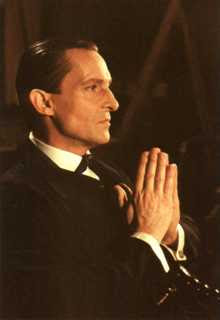
Jeremy BrettThe marked difference was in the the look of Holmes. The new movie has not shied away from redefining the portrait - gone is the combed back hairstyle, the sharp jawline and chin. Downey doesn't look anything like the classic Holmes, who has been played best by actor Jeremy Brett (see on the right) in the almost complete series by Granada Television. Jeremy Brett was probably the first to capture the full theatrical intensity of the character, watching him was like following the original sketch in the books. In fact, my friend Prasanna aptly remarked that the villain in the movie is a closer look to the classic Holmes. Not commonly known is the story that the look of Holmes didn't come from the author A.C. Doyle but from his first illustrator.

The story of Sherlock Holmes first began in 1887, with the story A Study in Scarlet, published in Strand magazine, London. The Sign of Four was published in 1890, and the series The Adventure of Sherlock Holmes began in 1891 ...

With the stories serialized in The Strand came the first illustrations, and it was Sydney Paget who was to fix the the features of the tall, thin, bony character for generations of enthralled readers. The story is that Sydney was actually commissioned by mistake, instead of his brother Walter, whose work the magazine knew through his illustrations for Rider Haggard and Robert Louis Stevenson. If so, this quirk of fate was balanced by a kind of poetic justice on Sydney's part, for he used his brother's lean features as his model for Holmes. And later after Sydney's death in January 1908, Walter himself illustrated one of the stories, The Adventure of the Dying Detective. What Holmes would have looked like had Walter got there first we can only guess, for, like all the other artists commissioned to continue Sydney Paget's work, Walter did not stray far from the image of himself Sydney had fleshed upon the bones of Conan Doyle's creation.
- Preface, The Complete Illustrated Sherlock Holmes


Holmes has been seen that way ever since. There have been many actors in to play the detective, all bearing resemblance to Sydney Paget's illustration.

However, more than that, the reason Sherlock Holmes has avid followers around the world and across generations is his personality. In a sense he is very much a 20th century man, before his times, even bit of a rebel. His firm foundation in scientific principles led him to be accessible, yet his public performance of a mind-reader and magician is highly entertaining. He's a magician who, in the end, reveals his tricks of the trade, leading all who read the accounts to think that they can follow the indicated lead. He's a fictional character that has inspired creation of countless other similar fictional characters. It becomes more than just a story.

The new movie with all the benefits of modern technology (and big budget) fills in the larger picture as well. The musical score suits the setting. There are panoramic views of the London of the late 19th century, with references to the social, technological and industrial upheavels taking place ..

Arthur Conan Doyle's birth year, 1859, fell 22 years into Queen Victoria's 64-year reign, a time of unparalleled growth and optimism for the British Empire. Resources and labor taken from colonies worldwide had made England prosper, and the time of serious independence struggles lay in the distant future. Business flourished, technology blossomed, and London grew at a great rate - from one million people to six in the space of a century - creating problems of urban overcrowding familiar to us today: poverty, homelessness, drug abuse, crime. While the great divide between rich and poor and the economic and human strain of maintaining the colonies exacerbated social problems that were as yet insoluble, Victorian Britons, led by Victoria's husband Albert, put their faith in technology and science. The contrasts and conundrums of this fascinating time provided Conan Doyle with the raw material and the backdrop for Sherlock Holmes: a man of science, undistracted by the gentler passions, who moved easily through the disquieting urban space, using his wits to solve its moral and practical dilemmas.
- Sherlock Holmes, Victorian Gentleman http://sherlockholmes.stanford.edu/history.html


Come to think of it, there are actually many parallels to the enormous changes taking place in cities of the today's emerging nations. Many of similar patterns and contrasts can be spotted in places such as New Delhi. It could be a new setting for a modern fictional detective.

Apr 16, 2008

200,000 books, one Geek with his computers

A very interesting New York Times article covers what is effectively a stupendous mockery of the process of creating a book. But books are produced nevertheless, and some people buy them.

The infinite monkey theorem states that a monkey hitting keys at random on a typewriter keyboard for an infinite amount of time will almost surely type a particular chosen text, such as the complete works of William Shakespeare.  - Infinite monkey theorem, Wikipedia
Humans cannot deal with infinity, but we can use better assistants than monkeys to reduce the time it takes. In the Information age, Philip M. Parker, has put his name to 200,000 books setting records for being a prolific author. The catch to this inhuman behaviour is an array of assistant computers programmed to fetch information online on any particular topic and compile them into a book. He explains the process in the following video.


It's unnerving to think that this process can be extended to other media like games, audio and video as well. Effectively it establishes the precedent that a person is not required to compile content into human consumption media items like books or movies.

At the library end, I wonder what this implies for cataloguers. It doesn't make sense for humans to be organizing output that comes from machines. Do cataloguers they have to be human too, or can they just be machines instantly summarizing and deriving overviews from the content?

I found some of these books here on Amazon.

The New York Times article can be found here.


Mar 6, 2008

Books: Richard Herley

Here's another author who is now offering his books (or ebooks) direct to users. A relatively well-known author who's book The Stone Arrow won the Winifred Holtby Memorial Prize. His book The Penal Colony was made into a movie No Escape starring Ray Liotta.

He likens his delivery mode to software shareware - "A model based on trust" :

You are free to download and read each of the books posted on this site. If you enjoy or gain value from it, I ask you to pay me a one-off fee. Just as with computer shareware, the same condition is imposed on recipients of any copies you make.

The fee is related to the length of work as well as to my collection costs, and is comparable to a single royalty from a mid-priced edition. It is much less than the price of a paperback or a commercial ebook of similar quality and length.

In this way you will encourage me to go on producing work you like. I hope that you will also feel a personal interest in the book concerned and a connection with its author.

The books are available on his website http://www.richardherley.com/ .


Mar 2, 2008

Book: Future of Reputations


An interesting book The Future of Reputation, by Daniel J. Solove is now available for free online. It describes itself in the introduction:

This is a book about how the free flow of information on the Internet can make us less free. We live in an age drenched in data, and the implications are both wonderful and terrifying. The Internet places a seemingly endless library in our homes; it allows us to communicate with others instantly; and it enables us to spread information with an efficiency and power that humankind has never before witnessed. The free flow of information on the Internet provides wondrous new opportunities for people to express themselves and communicate.

But there’s a dark side. As social reputation–shaping practices such as gossip and shaming migrate to the Internet, they are being transformed in significant ways. Information that was once scattered, forgettable, and localized is becoming permanent and searchable. Ironically, the free flow of information threatens to undermine our freedom in the future.

These transformations pose threats to people’s control over their reputations and their ability to be who they want to be.
More on this topic
It is often thought that a team of editors or moderators could go through each item of information submitted to verify the veracity. But then the volume of information submitted in an open online environment has the potential to easily overwhelm the resources (particulary human resources) we deploy. Even more difficult are the cases where conclusions submitted online can be a single side in an unresolved debate.

The solutions to these problems probably lie in the very openness of the environment that is setup. First of all a disclaimer can be published that the information given is not necessarily verified. After that, self-assessing mechanisms can be enabled that contributors use to assess and qualify the authority of information objects found online, such as ratings.

There has been the emergence of certain organisations that offer reputation-monitoring services. They keep an eye on every online manifestation relevant to your interest and keep you informed if anything untoward takes place. One such is distilled.

Sep 4, 2007

Printing Wikipedia

Everybody who has studied in school and university would have seen, touched and interacted with the print edition of the Encyclopedia Britannica. It consists of over 30 hard bound volumes of printed text, illustrations and images, probably as shown below.

Encyclopaedia_Britannica_15_with_2002

What happened if we were to print out a copy of the popular online encyclopedia Wikipedia, in a similar format? For the August 2007 edition of the English language Wikipedia, the result is below

Size_of_English_Wikipedia_in_August_2007

The creator of this images describes it as

Using volumes 25cm high and 5cm thick (some 400 pages), each page having two columns, each columns having 80 rows, and each row having 50 characters, ˜ 6MB per volume. As English Wikipedia has around 7.5GB of text (August 2007, length of wikitext counted by myself) ˜ 1250 volumes. Note that this is a conservative estimate, as it doesn't include images, tables etc. which take up more surface than the text which describes them.

Jul 25, 2007

More from Unshelved - the Public Library Comic Strip

There's been another interesting series from Unshelved that I covered last time, which relates to new media and old media. This time books and ephemera join the existential discussion. See below.

Monday, July 09, 2007


Tuesday, July 10, 2007


Wednesday, July 11, 2007


Thursday, July 12, 2007


Friday, July 13, 2007


Previous Related Post

Jun 27, 2007

Everything is Miscellaneous - from David Weinberger

Humans have the capacity to handle the huge amounts of information, but as we get immersed in the digital information age, even that capacity is under strain. One of the main ways we organise our perception of concepts and objects around us is to categorise them, then set up hierarchies of those categories.

However, here is an interesting counter-point from David Weinberger. He's written a book - Everything Is Miscellaneous: The Power of the New Digital Disorder, which I may read 'eventually', but if you're pressed for time and rather see the video it is provided below.


Further Links

Apr 18, 2007

Book Review: The First $20 million is Always the Hardest

book coverI read this book around 5 years ago, but it's passages keep coming back to me. It's quite superb and written for anyone to read, though techies will identify with it and enjoy it the most. I laughed and nodded my head through many of the pages. It was published in March 1997 and is authored by Po Bronson, who has been described as: "Po Bronson is a genuine voice of a new generation, the bard of Silicon Valley." by Lewis Lapham

It is written in the time and about the time when information technology was a boom story. Everybody was inflating the internet bubble without any conception of a possible bust at the end. Many techies were working feverishly to turn their expertise and ideas into fortune. Riches and Glory never seemed so near as in those early years. It may seem so long ago, but we are only talking the 1990's.

In the beginning of the book an employee, the main character Andy Caspar, goes through the process of leaving his company - yeah, you simply can't just walk out. He's on a bright-eyed quest to join the league of enterprising individuals out there engaging in research and making a difference. At the other end is a seasoned project manager, Francis Benoit who's already had a string of achievements under his belt and is now trying to form a new team. He's past the hype and trying to push the realistic boundaries. The starting setting is 'LaHonda research center', the place where Francis Benoit works and where Andy Caspar is looking to join.

Excerpt:

Benoit chipped in. "I want him to keep my friend Ronny Banks, but Hank here has been trying to convince me that we should keep you instead. Maybe you would care to help us."

Andy was caught off guard. What could he possibly say about himself that would earn their respect? What did they want? "Look, I’m not a conventional engineer," he started out, "I didn’t even study engineering in college, but maybe that makes me … different." He was just saying something, but Francis Benoit leapt at it.

"Different? Now that’s an interesting theorem. How do you think it would make you different?"

"Well, I might approach a problem differently."

Francis baited him. "Are you saying you are different because you approach things differently, or you approach things differently because you are different?"

Now Andy wished he hadn’t said anything. "Sometimes I think I see simpler solutions …" he offered.

"Ahhh, now we have something. You said before that you approach things differently, therefore you are different. Now you say that you have simpler solutions, so I am to conclude that you are simple?"

Andy looked to Hank Menzinger for help. He was still there grinning away, as if we all should be enjoying our merry selves right now!

"Perhaps Andrews would be a little more comfortable if you asked him some questions," Menzinger offered.

Yes, do that, Andy thought. But wait—Andrews? Plural? Menzinger had said Andrews again. Menzinger thought his name was Caspar Andrews! Menzinger was his supposed advocate in this debate, the one small chance he had at being reinvited, and Menzinger didn’t even know his name!

"Uh, it’s Andy …"

Francis said, "You used to work at Omega, huh? Did you ever sell the Falcon chip?" Francis had designed the Falcon.

"I left before the Falcon. I was selling the Eagle, the 486."

"Did you like it there?"

Should he tell the truth? Probably not. "Yeah, I guess."

"Then why did you leave?"

"Dunno. They don’t really let marketing people become programmers. The usual career path is the other way around, programmers burn out after five years, move to marketing."

Francis said, "Why do you think they burn out so fast?"

This was a delicate question, but Andy couldn’t avoid the truth, even if Omega was a big sponsor for La Honda. "In that environment, programmers have to make so many compromises … it’s hard to keep the desire, the will, when half your work gets thrown out every year."

That brought a bit of a smile to Francis’ mouth. Andy wondered if maybe he’d said something right.


In the end Francis banishes Andy and a bunch of usual suspects to a shed to work on an impossible project, essentially to get them out of his main team. The project is to make the first $100 PC. Now what would happen if Andy's disgruntled bunch - somehow, maybe, actually succeed. That's where you'll have to read the book. It was one of those books that kept me in a happy mood for weeks.

If you don't like reading then there's the Movie. It is a disappointing Hollywood adaptation, mainly goofy without any of the intelligent sparks, and it ruins the advanced interesting makeup of many of characters.

At present, as the digital economy matures, the benchmarks for a successful idea are getting harder. In this year's Sun (Microsystems) Developers Day conference, the keynote speaker emphasized that investors look to see some sort of return on their investment within 6 months, they used to be patient for years.

Read Book Prologue
Read First Chapter
Amazon Link

Feb 18, 2007

Introduction to the Book

We all know when printing first started, but when was the first book compiled will always be a bit of a mystery with different civilizations staking their claim.


In India the tradition of passing detailed philosophical and spiritual knowledge from Guru to Shishya (student) was largely done through oral tradition. No doubt, the knowledge in question may have suffered distortion and amplification through such a medium, before the first written manuscripts were compiled and made into standard reference.

Following is a fun take on the 'introduction of a book' to European monks. It analogous to what it's like to introduce someone to new computer programs.

Feb 8, 2007

Librarians in the New World


Why use the library at all, with everything available for free on the internet and easily searchable? Wrong. Despite the formidable illusion, everything is not available on the internet. Consider the latest published journals and books, they are still under copyright and not available. Consider all the great works that haven't been converted to online media or e-books yet. Check whether the information you are getting from the net is reliable. Libraries enjoy the advantage of having authoritative information that you can quote on, and it's available for a very low membership cost, if not free. Yet all is not well in library world, librarians are wondering if they have a role in the future of information and knowledge services. An excellent article available here gives 33 reasons why librarians are still important. So, next time you visit a library, don't feel shy to consult a librarian about anything you need. Don't compare them to shop assistants trying to sell you something, they are just experts at finding the information you need.

Jul 7, 2006

Quick Knowledge bytes

The size of an author's single packet of output is shrinking. For that matter, so is the user's apetite for large books. As the value of time gets measured in sub-minute scale - who has time to read books? If you do, you are one lucky person, because I don't.

There are a lot of alternative media competing for my attention - TV, DVD/Video, Internet - each engineered to be more captive than the other. If before providers were after your money, now its your time as well.

It's a multi-tasking world, even in your spare time. After all, it is said we are only using upto 10% of our brains - so it can be deduced that nobody need care about an information overload.

I grew up reading books, used to be my favorite passtime. Best way I find to read a book is a quiet place or at most instrumental music in the background. It would also be good to have a tension-free hour. The fact that I have to work at creating that, shows me how much the world has changed. My modern multi-tasking nature does not let me sit still doing one thing - I feel too nervous, that I'm missing something else somewhere.

From the author's point of view, books take time, usually months to write those hundreds of thousands of words, formed into a coherent structure. Newer generations don't have that patience. Modern books tend to arise from a collection of previously published smaller articles.

Is it any wonder that blog site such as these generate so much more participation and output.