Showing posts with label review. Show all posts

Jan 7, 2010

Sherlock Holmes for the 21st century


I went to the cinema to expecting to see a different Sherlock Holmes, a character repackaged to cater to a new market, in a crude manner that detracts from his original essence. Didn't happen.

The new Sherlock Holmes, played by Robert Downey Jr., is a much more dynamic character - younger, more adventurous, bit less of the English gentleman than previously depicted. Nevertheless, the core of the character hasn't been lost - the eccentricity, self-assuredness, intense concentration, and even human weaknesses. Jude Law would not have been my choice for Dr. Watson, but he's pulled it off quite well, next to Downey's Holmes. So, if you are a fan of the classic A.C.Doyle's Sherlock Holmes, you probably won't be disappointed.
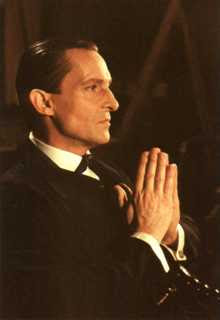
Jeremy BrettThe marked difference was in the the look of Holmes. The new movie has not shied away from redefining the portrait - gone is the combed back hairstyle, the sharp jawline and chin. Downey doesn't look anything like the classic Holmes, who has been played best by actor Jeremy Brett (see on the right) in the almost complete series by Granada Television. Jeremy Brett was probably the first to capture the full theatrical intensity of the character, watching him was like following the original sketch in the books. In fact, my friend Prasanna aptly remarked that the villain in the movie is a closer look to the classic Holmes. Not commonly known is the story that the look of Holmes didn't come from the author A.C. Doyle but from his first illustrator.

The story of Sherlock Holmes first began in 1887, with the story A Study in Scarlet, published in Strand magazine, London. The Sign of Four was published in 1890, and the series The Adventure of Sherlock Holmes began in 1891 ...

With the stories serialized in The Strand came the first illustrations, and it was Sydney Paget who was to fix the the features of the tall, thin, bony character for generations of enthralled readers. The story is that Sydney was actually commissioned by mistake, instead of his brother Walter, whose work the magazine knew through his illustrations for Rider Haggard and Robert Louis Stevenson. If so, this quirk of fate was balanced by a kind of poetic justice on Sydney's part, for he used his brother's lean features as his model for Holmes. And later after Sydney's death in January 1908, Walter himself illustrated one of the stories, The Adventure of the Dying Detective. What Holmes would have looked like had Walter got there first we can only guess, for, like all the other artists commissioned to continue Sydney Paget's work, Walter did not stray far from the image of himself Sydney had fleshed upon the bones of Conan Doyle's creation.
- Preface, The Complete Illustrated Sherlock Holmes


Holmes has been seen that way ever since. There have been many actors in to play the detective, all bearing resemblance to Sydney Paget's illustration.

However, more than that, the reason Sherlock Holmes has avid followers around the world and across generations is his personality. In a sense he is very much a 20th century man, before his times, even bit of a rebel. His firm foundation in scientific principles led him to be accessible, yet his public performance of a mind-reader and magician is highly entertaining. He's a magician who, in the end, reveals his tricks of the trade, leading all who read the accounts to think that they can follow the indicated lead. He's a fictional character that has inspired creation of countless other similar fictional characters. It becomes more than just a story.

The new movie with all the benefits of modern technology (and big budget) fills in the larger picture as well. The musical score suits the setting. There are panoramic views of the London of the late 19th century, with references to the social, technological and industrial upheavels taking place ..

Arthur Conan Doyle's birth year, 1859, fell 22 years into Queen Victoria's 64-year reign, a time of unparalleled growth and optimism for the British Empire. Resources and labor taken from colonies worldwide had made England prosper, and the time of serious independence struggles lay in the distant future. Business flourished, technology blossomed, and London grew at a great rate - from one million people to six in the space of a century - creating problems of urban overcrowding familiar to us today: poverty, homelessness, drug abuse, crime. While the great divide between rich and poor and the economic and human strain of maintaining the colonies exacerbated social problems that were as yet insoluble, Victorian Britons, led by Victoria's husband Albert, put their faith in technology and science. The contrasts and conundrums of this fascinating time provided Conan Doyle with the raw material and the backdrop for Sherlock Holmes: a man of science, undistracted by the gentler passions, who moved easily through the disquieting urban space, using his wits to solve its moral and practical dilemmas.
- Sherlock Holmes, Victorian Gentleman http://sherlockholmes.stanford.edu/history.html


Come to think of it, there are actually many parallels to the enormous changes taking place in cities of the today's emerging nations. Many of similar patterns and contrasts can be spotted in places such as New Delhi. It could be a new setting for a modern fictional detective.

Mar 6, 2008

Books: Richard Herley

Here's another author who is now offering his books (or ebooks) direct to users. A relatively well-known author who's book The Stone Arrow won the Winifred Holtby Memorial Prize. His book The Penal Colony was made into a movie No Escape starring Ray Liotta.

He likens his delivery mode to software shareware - "A model based on trust" :

You are free to download and read each of the books posted on this site. If you enjoy or gain value from it, I ask you to pay me a one-off fee. Just as with computer shareware, the same condition is imposed on recipients of any copies you make.

The fee is related to the length of work as well as to my collection costs, and is comparable to a single royalty from a mid-priced edition. It is much less than the price of a paperback or a commercial ebook of similar quality and length.

In this way you will encourage me to go on producing work you like. I hope that you will also feel a personal interest in the book concerned and a connection with its author.

The books are available on his website http://www.richardherley.com/ .


Aug 30, 2007

New way to resize images automatically

At the SIGGRAPH 2007 conference, in the session named Image Slicing and Stretching there has been a notable technology presented by two researchers from Mitsubishi Electric Research Laboratories (MERL).

Called Seam Carving for Content-Aware Image Resizing, it's described as

Seam carving is a method for content-aware resizing that changes the size of an image according to its content. This paper shows applications to aspect-ratio change, image retargeting, and object removal.

Resizing images to make them fit in the required internet form factor without distorting its contents has always been a bit of a challenge. The demonstration of this tool, seems to make the work involved a lot easier and automated. The ability of a page to resize with the browser window is called liquidity. Here the images in the page also support that concept.

It also demonstrates the capability of locating areas of that are least important or have the 'least energy' and removing them without any noticeable distortions. However, there are limitations, especially where there are large composition elements such as faces and people that cannot be skewed without obvious effects.

To see these very interesting image transformation capabilities see the following video.


The two researchers, Shai Avidan and Ariel Shamir have been promptly recruited by Adobe Systems Incorporated, who in-fact chaired the conference session. I fear this tool may also just get incorporated into Adobe's proprietary image manipulation software, instead of becoming available in the open source arena.

Meanwhile, traditionalists moan the manipulations possible in digital images and note that it undermines the integrity of photographs and the art of photography.

Jul 25, 2007

More from Unshelved - the Public Library Comic Strip

There's been another interesting series from Unshelved that I covered last time, which relates to new media and old media. This time books and ephemera join the existential discussion. See below.

Monday, July 09, 2007


Tuesday, July 10, 2007


Wednesday, July 11, 2007


Thursday, July 12, 2007


Friday, July 13, 2007


Previous Related Post

Jun 29, 2007

Unshelved - the Public Library Comic Strip

Here's a very nice place to go on the internet if you're interested in changes and challenges taking place in libraries. Unshelved claims to be 'the world's only daily comic strip set in a public library'. It's makers are writer Gene Ambaum (yes, that's a pseudonym) and co-writer and the artist Bill Barnes. Much more information available at Primer page.

I particularly like the last few cartoons based on the theme of Internet v Library:

Monday, June 25, 2007


Tuesday, June 26, 2007


Wednesday, June 27, 2007


Thursday, June 28, 2007


Friday, June 29, 2007


Saturday, June 30, 2007


Looks like they are going to continue with these for some time, so if interested keep following this series.

Apr 18, 2007

Book Review: The First $20 million is Always the Hardest

book coverI read this book around 5 years ago, but it's passages keep coming back to me. It's quite superb and written for anyone to read, though techies will identify with it and enjoy it the most. I laughed and nodded my head through many of the pages. It was published in March 1997 and is authored by Po Bronson, who has been described as: "Po Bronson is a genuine voice of a new generation, the bard of Silicon Valley." by Lewis Lapham

It is written in the time and about the time when information technology was a boom story. Everybody was inflating the internet bubble without any conception of a possible bust at the end. Many techies were working feverishly to turn their expertise and ideas into fortune. Riches and Glory never seemed so near as in those early years. It may seem so long ago, but we are only talking the 1990's.

In the beginning of the book an employee, the main character Andy Caspar, goes through the process of leaving his company - yeah, you simply can't just walk out. He's on a bright-eyed quest to join the league of enterprising individuals out there engaging in research and making a difference. At the other end is a seasoned project manager, Francis Benoit who's already had a string of achievements under his belt and is now trying to form a new team. He's past the hype and trying to push the realistic boundaries. The starting setting is 'LaHonda research center', the place where Francis Benoit works and where Andy Caspar is looking to join.

Excerpt:

Benoit chipped in. "I want him to keep my friend Ronny Banks, but Hank here has been trying to convince me that we should keep you instead. Maybe you would care to help us."

Andy was caught off guard. What could he possibly say about himself that would earn their respect? What did they want? "Look, I’m not a conventional engineer," he started out, "I didn’t even study engineering in college, but maybe that makes me … different." He was just saying something, but Francis Benoit leapt at it.

"Different? Now that’s an interesting theorem. How do you think it would make you different?"

"Well, I might approach a problem differently."

Francis baited him. "Are you saying you are different because you approach things differently, or you approach things differently because you are different?"

Now Andy wished he hadn’t said anything. "Sometimes I think I see simpler solutions …" he offered.

"Ahhh, now we have something. You said before that you approach things differently, therefore you are different. Now you say that you have simpler solutions, so I am to conclude that you are simple?"

Andy looked to Hank Menzinger for help. He was still there grinning away, as if we all should be enjoying our merry selves right now!

"Perhaps Andrews would be a little more comfortable if you asked him some questions," Menzinger offered.

Yes, do that, Andy thought. But wait—Andrews? Plural? Menzinger had said Andrews again. Menzinger thought his name was Caspar Andrews! Menzinger was his supposed advocate in this debate, the one small chance he had at being reinvited, and Menzinger didn’t even know his name!

"Uh, it’s Andy …"

Francis said, "You used to work at Omega, huh? Did you ever sell the Falcon chip?" Francis had designed the Falcon.

"I left before the Falcon. I was selling the Eagle, the 486."

"Did you like it there?"

Should he tell the truth? Probably not. "Yeah, I guess."

"Then why did you leave?"

"Dunno. They don’t really let marketing people become programmers. The usual career path is the other way around, programmers burn out after five years, move to marketing."

Francis said, "Why do you think they burn out so fast?"

This was a delicate question, but Andy couldn’t avoid the truth, even if Omega was a big sponsor for La Honda. "In that environment, programmers have to make so many compromises … it’s hard to keep the desire, the will, when half your work gets thrown out every year."

That brought a bit of a smile to Francis’ mouth. Andy wondered if maybe he’d said something right.


In the end Francis banishes Andy and a bunch of usual suspects to a shed to work on an impossible project, essentially to get them out of his main team. The project is to make the first $100 PC. Now what would happen if Andy's disgruntled bunch - somehow, maybe, actually succeed. That's where you'll have to read the book. It was one of those books that kept me in a happy mood for weeks.

If you don't like reading then there's the Movie. It is a disappointing Hollywood adaptation, mainly goofy without any of the intelligent sparks, and it ruins the advanced interesting makeup of many of characters.

At present, as the digital economy matures, the benchmarks for a successful idea are getting harder. In this year's Sun (Microsystems) Developers Day conference, the keynote speaker emphasized that investors look to see some sort of return on their investment within 6 months, they used to be patient for years.

Read Book Prologue
Read First Chapter
Amazon Link

Oct 28, 2006

Review: An Inconvenient Truth


Iconvenient Truth Photo

I rate it a full '5 stars'. If you can see it, see it on a big screen, that's where the scale of the presentations make an impression. I went with my wife today, on a Saturday morning, and found the cinema empty. It was a fun exclusive screening.

Though many of the facts are popularly known, this movie meets the challenge of presenting these in their true context while making an impact. Along the way, Al Gore explains his life-long involvement in the issue, and that this is not a new fad that he has picked up. Examples of worldwide glacier reduction and desertification are very shocking. Many areas neglected in the popular media, show some of the most disturbing illustrations.

This movie may have an effect where everything else seems to have failed - changing the perception of the US public. Most of them don't really care, think that environment concerns are questionable, don't affect them, or is just another way to spoil their economy. Strangest of all the US administration seems to agree with this. Perhaps its just that US government is heavily swayed by mercantile lobby. The movie does acknowledges that US accounts for more carbon dioxide emissions than most of the earth's continent combined. The refusal to ratify the Kyoto protocol is highlighted. It is also noted that some states of the US are disagreeing with the central administration and trying to pass smarter emission regulations. Most of the states shown seemed to be democratic.

But its more than that - Asia is rising and following on the same paths that developed countries have. With all the talk of leapfrogging technology era's, perhaps Asia can leapfrog over the industrial irresponsible practices and be more environment friendly. Japan is shown to have the worlds best car emission regulations. In New Delhi, the public transport system buses and autorickshaws have been converted to Natural Gas engines, perceptibly improving the air quality of the city.